
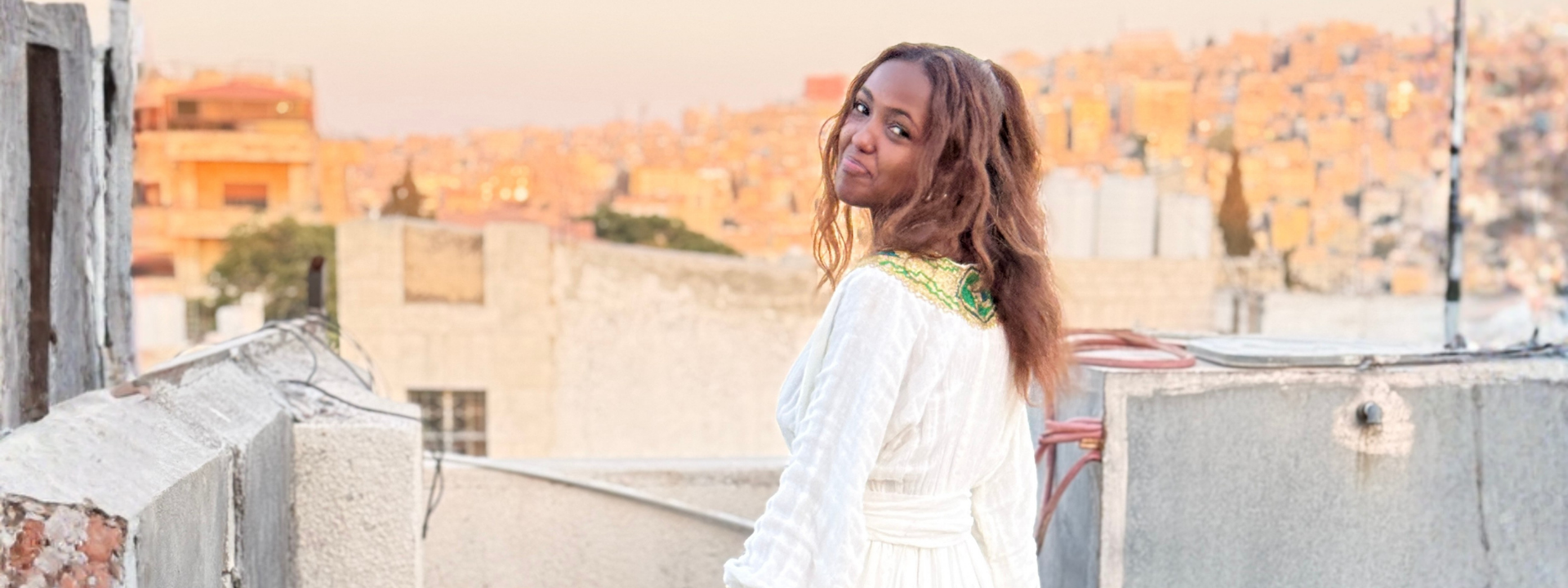
SHOWING UP + LOVE = DIGNITY
MEET SADA
From Captive to Advocate.
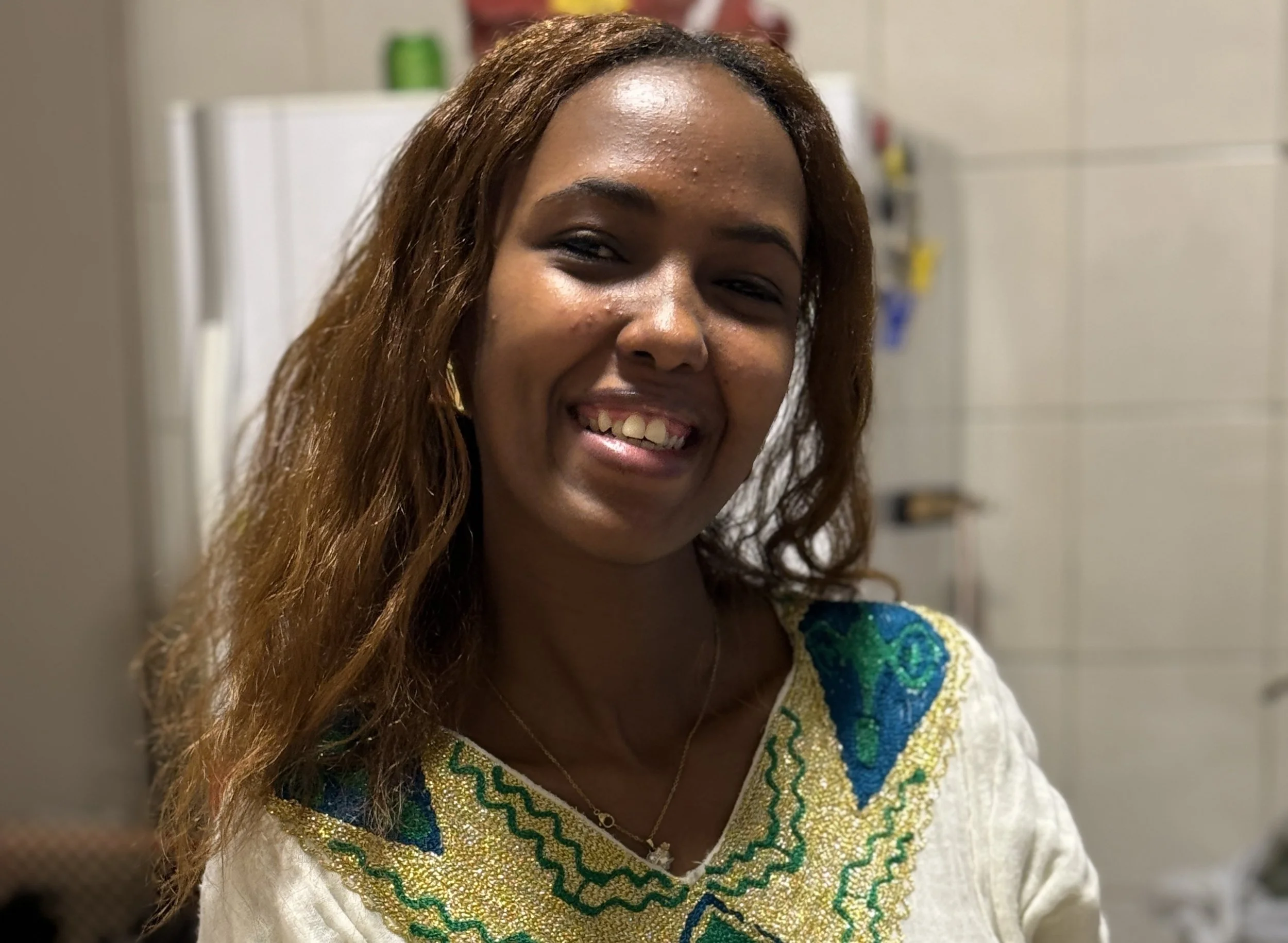
How do you restore dignity to a woman who has lost her passport, her wages, and her freedom, thousands of miles from home?
The answer begins with showing up. People who feel forgotten need someone to see them, speak their name, and stand beside them until they can go home.
The prison in Jordan is stark by design. Its walls are concrete gray, draped in rolled barbed wire. Guards stare down from above, weapons held to their chests. Inside are women whose stories few people ever hear.
Visiting is a lesson in patience. A guard checks the woman's name against the record, pats you down, and escorts you to a waiting room. And there you sit. Children wait to see their mothers. Moms dab away tears for their daughters. Husbands wonder what comes next.
When her name is called, you step to a phone behind a thick pane of glass. On the other side, she lifts the handset with a trembling hand.
You look her in the eyes and simply say, “I’m here to help.”
She forces a small smile. There are only five minutes. You ask about her case, her paperwork, and whether her family knows where she is. A word of encouragement. A promise of help. A prayer for comfort in the coming day.
A tear wells in the corner of her eye. “I just want to go home.”
Before you leave, you hand over five dinars so she can buy phone minutes and toiletries from the canteen. Behind her, 50 other women wait, each hoping for five minutes with a family member, a friend, or even a stranger.
The words of Hebrews echo in your soul: “Continue to remember those in prison as if you were together with them in prison.”
Sada knows that waiting room from the other side of the glass.
Now 23 years old, she left Ethiopia to work as a domestic worker for a family in Jordan. She is one of many. Young women come from the Philippines, Kenya, Ghana, Ethiopia, Uganda, and other countries to earn money for their families back home. Agencies recruit them and place them with local, often wealthy households for housekeeping, childcare, and personal assistance.
“Being abroad is hard. Leaving your family behind, that’s the hardest thing in life,”
“But at the same time, you can then help your siblings. I did it.
I helped pay for my sister’s studies.”
Usually, the work goes well. But far too often, it devolves. A passport is held “for safety.” Food and wages are restricted. Hours stretch on to exhaustion. The promise becomes a nightmare.
That was Sada’s story.
She signed a contract with a placement agency that was supposed to ensure a smooth placement. The red flags came quickly. Her employer took her passport, and without it, she could not access medical care or seek legal protection. She was trapped.
Then he took her to his second home in a remote location. There she faced harassment, and she escaped for the first time.
She was arrested, spent an awful night in the local jail, and was transferred to the larger prison, surrounded by women with eerily similar stories.
“When you are first in prison, you start to think, ‘
I’m not a human being, I was scared and alone.”
She was released and returned to her employer, but the cycle began again, and his behavior grew worse. In all, she was imprisoned four times over disagreements with her employer.
After an advocacy group secured her final release, Sada did something remarkable. She turned her sadness into advocacy. She began by comforting the friends she had made in prison and helping them with their needs. She became a warrior for other women facing similar fates.
Reclaim Global Staff Danny and Lauren Garnett were already in Jordan,
involved in community engagement with refugees and others.
“We both felt led to this work from a young age,” said Danny. “We both have always drifted towards wanting to help people, to advocate for people that don’t have a voice.”
When they learned about the women in prison, the questions came fast.
“Why are these women in prison? What happened? What is this a part of?” Lauren said. “And then you start to notice it everywhere.”
Those questions led them to Sada, who was already doing what she could for the women behind bars. It was the perfect opportunity to partner with her.
“Once we got to know her, we realized that she kind of had these natural leadership abilities,” said Lauren. “She fights for people. She’s not timid.”
The respect runs both ways.
“When I met Lauren, I really liked her,” Sada said. “She and Danny had a passion and a desire to help me.”
Today, Sada works full time with the Garnetts, bridging gaps for women facing what she once faced. Having been through the system herself, she is well positioned to advocate and to lead.
Together they partner with Set Captives Free, a program founded by a woman who calls herself Mother Melissa. The work combines immediate humanitarian aid with lasting, systemic support.
“We assist these migrant domestic workers who don’t have embassies here through prison visitations, casework, and repatriation, so that they can safely return home,” said Danny.
The first goal is comfort. Most of these women are far from home, facing situations they never imagined. A visit, a word of encouragement, and a prayer are the first steps toward reclaiming their dignity.
The team provides canteen funds for soap, hygiene supplies, and phone credits so the women can stay connected with family. They work with prison and legal officials on paperwork. And they help women with emotional and mental health challenges find appropriate care, keeping them off the streets after release.
For Lauren, the work is about restoring dignity and hope, a light at the end of the tunnel.
“They are literally stuck, and we help them get out, to be able to get home,
But their journey doesn’t end when they return home. We try to partner with aftercare partners so that we can provide them with the skills, training,
and abilities to be able to stay in their home countries.”
When Jesus told his followers to visit those in prison, he did not provide a guidebook. He did not limit the visits to the falsely accused or the righteous. His call was simple: show up.
Sada, her fellow warriors, and Reclaim staff are showing the way. For Sada, the reason is personal.
“It upsets me to see them like that; I know how much it means to have
someone visit and try to help.”

Together, let’s help people + communities flourish!
LET’S TELL MORE STORIES LIKE THESE
Your gift empowers Reclaim to bring lasting hope and remove barriers so that people around the world can experience the fullness of their God-given dignity!
Together, we can work to provide marginalized individuals and vulnerable communities the opportunity to live flourishing, abundant lives.